In Silico Technologies Tailored to PepMetics®
In silico technologies are widely used in drug discovery for molecular design and analysis of interactions between compounds and target proteins. PRISM BioLab has established proprietary in silico drug discovery technologies specifically optimized for PepMetics® compounds. We continuously pursue multifaceted approaches to accurately model the unique structural features and behaviors of PepMetics® chemical space.
Development of a Dedicated Force Field for PepMetics® Compounds
Advances in computational technology have made molecular modeling an essential tool in modern drug discovery. Molecular simulations predict how compounds move, change conformation, and bind to target proteins.
A molecular force field—often described as a “dictionary of molecular rules”—defines interatomic interactions, bond flexibility, and energetics using mathematical expressions and parameters. While commonly used force fields are optimized for conventional small molecules, they fail to accurately reproduce the three-dimensional structures and dynamics of PepMetics® compounds.
To address this limitation, we have developed a proprietary force field dedicated to PepMetics®. This enables precise reproduction of PepMetics® compound behavior in molecular simulations, thereby supporting accurate molecular design.
Leveraging Quantum Mechanics for Structural Accuracy
PepMetics® compounds combine structural rigidity and flexibility. To accurately understand their three-dimensional conformations and dynamics, PRISM BioLab employs quantum mechanical calculations. Structural accuracy is fundamental to structure–activity relationship (SAR) studies, and high-precision computational structures substantially enhance the value of in silico drug discovery.
Using quantum mechanics, we design new PepMetics® scaffolds and predict physicochemical parameters, applying state-of-the-art computational chemistry to improve drug discovery outcomes
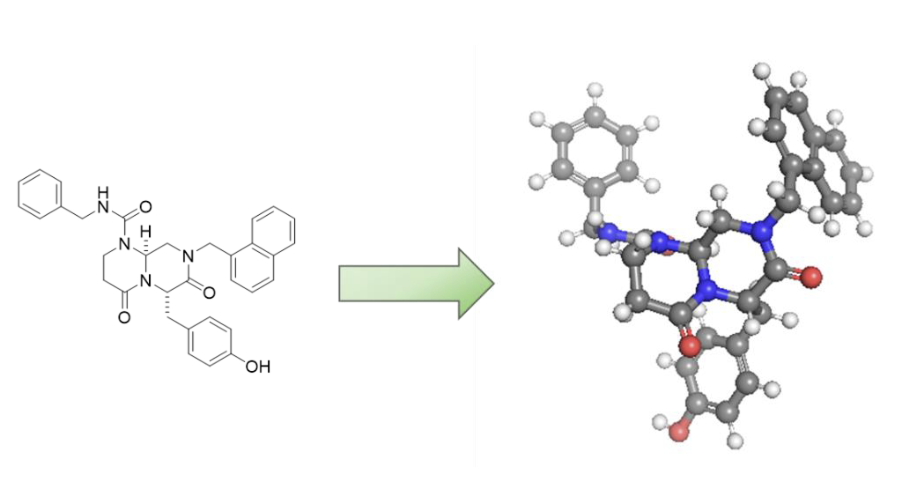
Examples of published compound structures
Molecular Design Based on Dynamic Interaction Analysis
Drug discovery targeting protein–protein interactions (PPIs) requires understanding of the intrinsic dynamics of proteins. Unlike enzyme–substrate interactions that involve relatively rigid binding pockets, PPIs often lack well-defined pockets and involve large conformational changes.
PRISM BioLab actively incorporates molecular dynamics simulations to analyze the dynamic interactions between proteins and ligands. Through precise molecular design based on these analyses, we generate compounds capable of effectively modulating PPIs.
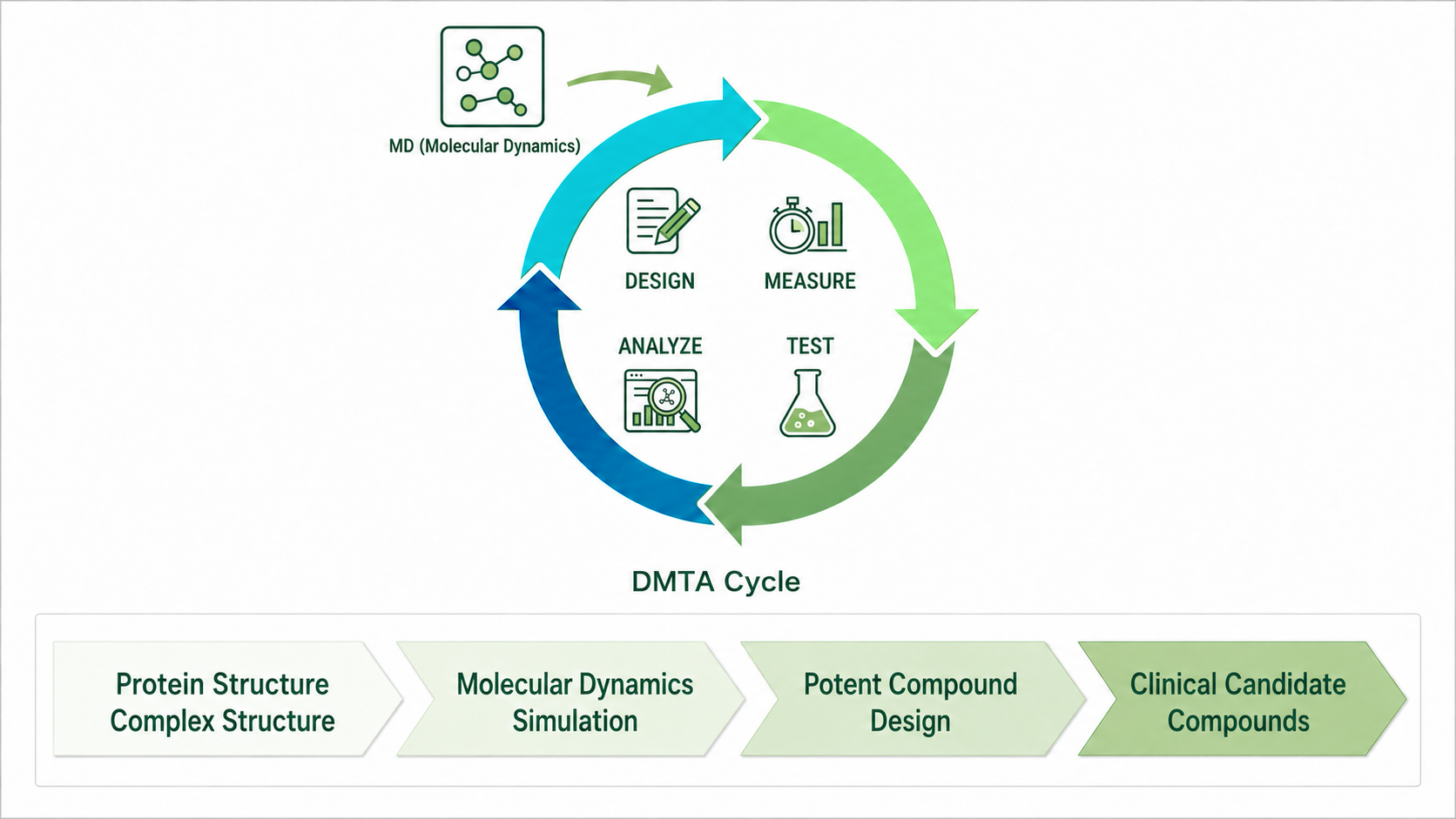
Hot Spot Analysis
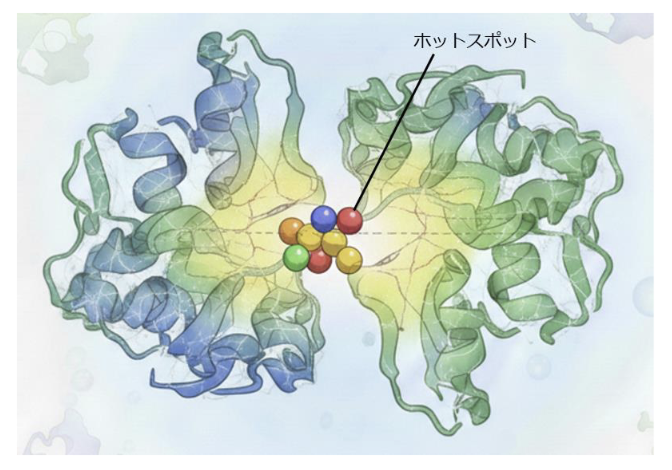
Hot spots are critical regions that dominate PPIs and serve as key targets for molecular design. Although PPIs involve large interaction surfaces, only specific residues contribute significantly to binding affinity. By identifying and targeting these hot spots, even small molecules with relatively small surface areas can effectively interfere with protein–protein nteractions.
Experimental methods such as alanine scanning are commonly used to identify hot spots but may introduce artificial structural perturbations. PRISM BioLab applies proprietary in silico approaches to identify hot spots while preserving native protein conformations. By designing molecules that mimic amino acid sequences containing hot spots or span multiple hot spots, we efficiently generate hit compounds.
Through these efforts, PRISM BioLab continuously advances in silico technologies specialized for PPI drug discovery, enabling highly precise molecular design.